Over the Phone Interpretation and What Buyers Keep Getting Wrong
- September 07, 2026
- Interpreting Services , over the phone interpretation
The call that convinced me starts at 2.14 on a Tuesday morning. A woman has walked into an emergency department in a city where she has lived for six weeks. She speaks Tigrinya. The triage nurse speaks English and enough Spanish to be dangerous. Somebody dials a number, waits eleven seconds, and a third voice joins the line.
Nine minutes later the patient has been assessed properly. Without that third voice the same conversation takes an hour, relies on a teenage relative who should not be translating a miscarriage, and produces notes that nobody would want to defend later.
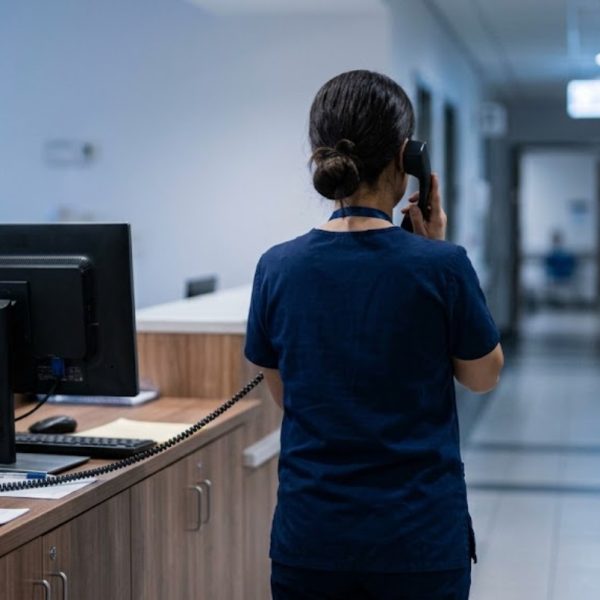
That is what over the phone interpretation is for. It is not a cheaper alternative to a human in the room. It is a different service, with different strengths, and buyers who confuse the two end up disappointed by both.
What the format is genuinely good at
Speed is the whole proposition. A booked on-site interpreter needs days of notice and a minimum booking, usually two hours. A phone line connects in under a minute for most common languages and bills by the minute after that. For anything unscheduled, that difference decides whether interpreting happens at all.
Coverage is the second advantage. No organisation can keep on-site interpreters for a hundred languages within reach of every branch. A pooled national or global roster can, because the same Tigrinya interpreter serves a hospital in one city at two in the morning and an insurance call in another at ten.
And it works for the short interaction, which is most interactions. A benefits query, an appointment confirmation, a delivery dispute, a bank account verification. These take four minutes and would never justify a booking, so historically they simply happened badly.
Where it struggles, and why nobody tells you
Remove the visual channel and you remove a great deal of information. An interpreter on a line cannot see the patient wince, cannot see the customer's confusion, cannot see who else is in the room and whether the person is free to speak honestly. Skilled interpreters compensate by asking, which slows things down and occasionally irritates the professional on the other side who wanted a transparent conduit.
Long or emotionally heavy sessions are the weakest fit. A ninety minute psychiatric assessment or a formal disciplinary hearing needs a person present. So does anything involving documents that must be read together, or a child, or a group.
Audio quality is a bigger determinant of accuracy than most buyers believe. A speakerphone in a noisy ward produces errors that no amount of interpreter skill can prevent. Handsets or dual-handset phones cost very little and improve outcomes more than switching vendors ever will.
Understanding the pricing
Most contracts are per minute, and the headline rate is the least interesting part. What separates a cheap quote from a good one is everything around it.
Look at connection time, which some providers bill and some do not. Look at minimum billing increments, since a one minute call charged as five changes the economics of high-volume, low-duration work entirely. Ask about rare language surcharges, out of hours loading, and whether the quoted rate covers qualified interpreters or a general pool.
Buyers researching over the phone interpretation rates often find quotes varying by a factor of three, and assume the market is irrational. It usually is not. The cheap end is unvetted freelancers with no confidentiality regime and no quality monitoring. That is fine for confirming a delivery slot. It is not fine for a clinical consultation.
Buyers keep getting over the phone interpretation wrong by shopping on price per minute alone. The same error shows up when commissioning subtitling services where the cheapest quote usually excludes timing, review and formatting. Comparing line items matters more than comparing headline rates.
Buyers of phone interpreting usually get the brief wrong in the same way, treating it as a utility rather than a role in the conversation. The interpreter is part of the meeting, and briefing them changes the outcome measurably. Seeing how interpretation services actually bridge business communication makes that easier to plan for than any pricing sheet.
The compliance angle
In several sectors this stopped being optional some time ago. Healthcare organisations operating under the United States National CLAS Standards are expected to provide language assistance at no cost to the patient, at all hours of operation. Similar duties exist across European public services and in regulated financial advice.
The recurring failure is not the absence of a contract. It is staff not using it, because the process is awkward or because someone believes the family member standing there will do. Organisations that get real value from phone interpretation services put the access number on every desk phone, train people in the three-way call flow, and record language of preference in the file so nobody has to improvise twice.
How to run a call well
Interpreting over a line is a skill for everyone on it, not only the interpreter. A few habits change the outcome noticeably.
Introduce yourself and state the purpose in one sentence, so the interpreter knows the register and the stakes. Speak to the client directly, in the first person, rather than saying "tell her that." Pause every couple of sentences instead of delivering a paragraph. Avoid idioms and acronyms, which are the leading cause of awkward silences. And let the interpreter interrupt to clarify, because an interpreter who never interrupts is guessing.
None of this is complicated, and it is worth reading a plain overview of how language interpretation actually works before assuming the role is mechanical. It is not. The person on the line is making rapid judgements about register, cultural framing and ambiguity while holding two utterances in memory.
Choosing a provider
Ask three questions and the field narrows fast. What is the average connect time for your five most-needed languages, measured rather than promised. How are interpreters vetted and how often is their work monitored. What happens at three in the morning on a public holiday.
Calls like these rarely end with the conversation itself, because the notes, consent forms and follow up letters still have to exist in both languages. Those written records carry legal and clinical weight long after the line goes quiet, and an informal translation quietly undermines the care taken during the call. Organisations that rely on certified translation services for the paperwork close that gap, since the documents are translated and attested to the standard official recipients expect. The result is a record that matches the quality of the interpreted conversation it came from.
Then test it. Place a dozen calls in the languages you actually need, at the hours you actually need them, before signing anything. Providers who are confident will encourage this, and the ones who hesitate have told you something useful. Sometimes the fastest way to understand the service is simply to read what a specialist says about phone interpreter services when a client cannot wait, then hold your shortlist to that standard.